
“Remember not only to say the right thing in the right place, but far more difficult still, to leave unsaid the wrong thing at the tempting moment.”
-Benjamin Franklin
Scholarly Presentations
-
UNT Learning Technologies ERE 2025
At the Educational Research Exchange (ERE), I presented a paper examining how gamification interacts with students’ socioeconomic educational backgrounds in undergraduate STEM learning. The session focused on findings from a study of first-year chemistry students who used either a gamified platform (Blooket) or a non-gamified practice system to work through complex learning tasks.
The presentation highlighted a key takeaway: while overall differences between tools were modest, students from high-poverty high school backgrounds reported significantly greater persistence, particularly when using the gamified platform. These findings suggest that gamification may not function as a one-size-fits-all solution, but instead may hold particular promise as an equity-oriented instructional strategy when designed with students’ prior educational contexts in mind.
The session sparked discussion around motivation, engagement, and persistence in complex STEM learning, and emphasized the importance of context-aware instructional design rather than universal adoption of gamified tools.
-
SITE 2025 - Assessing Perceptions of AI in Education
I presented alongside other scholars in a panel focused on multiple approaches to understanding perceptions of artificial intelligence (AI) in education. The session explored how researchers and practitioners are examining attitudes toward AI using a range of methodological lenses, from traditional qualitative interviews addressing trust, ethics, and classroom use, to quantitative Likert-type surveys measuring attitudes and beliefs.
The panel also highlighted emerging approaches, including frequency-of-use reporting, studies examining learners’ ability to distinguish between human- and AI-generated narratives, and research on established instructional innovations such as game-based learning that are increasingly being infused with AI tools. Together, the session emphasized the value of using diverse and complementary methods to capture how students and educators perceive, evaluate, and experience AI in educational contexts.
-
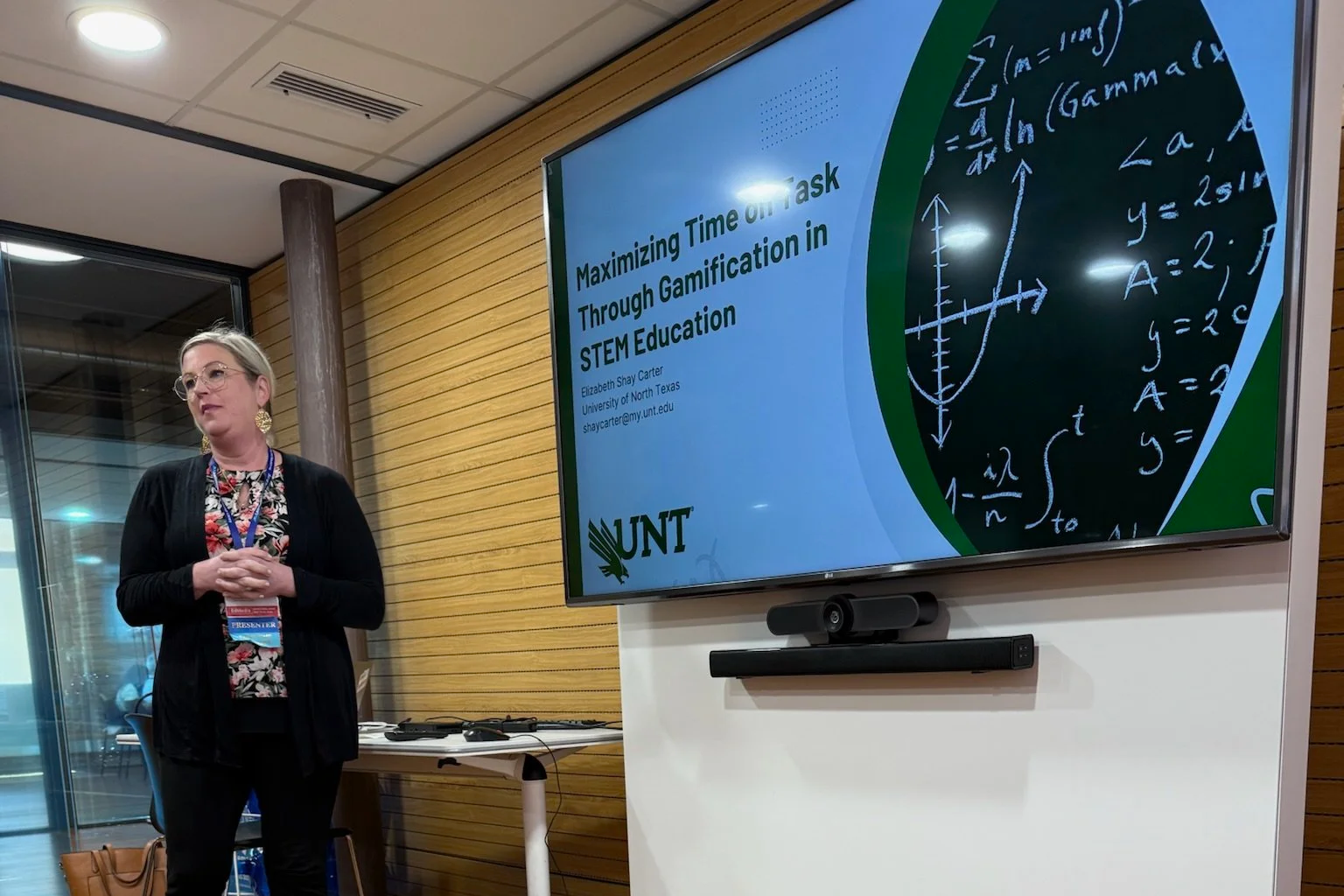
Ed Media 2025 - Maximizing Time on Task Through Gamification in STEM Education
At the EdMedia 2025 conference in Barcelona, my presentation "Maximizing Time on Task Through Gamification in STEM Education" focused on how game elements like rewards, feedback, and competition can improve student engagement in STEM courses. It highlighted research linking gamification to increased focus and persistence, especially in challenging subjects like chemistry and mathematics.
The presentation explained how gamification aligns with key theories like the Technology Acceptance Model (TAM) and Self-Determination Theory (SDT) to motivate students. Attendees participated in an interactive activity that demonstrated how gamified tools can make complex tasks more manageable.
The session provided straightforward strategies for incorporating gamification into STEM education, emphasizing its potential to boost engagement and support student success.
-
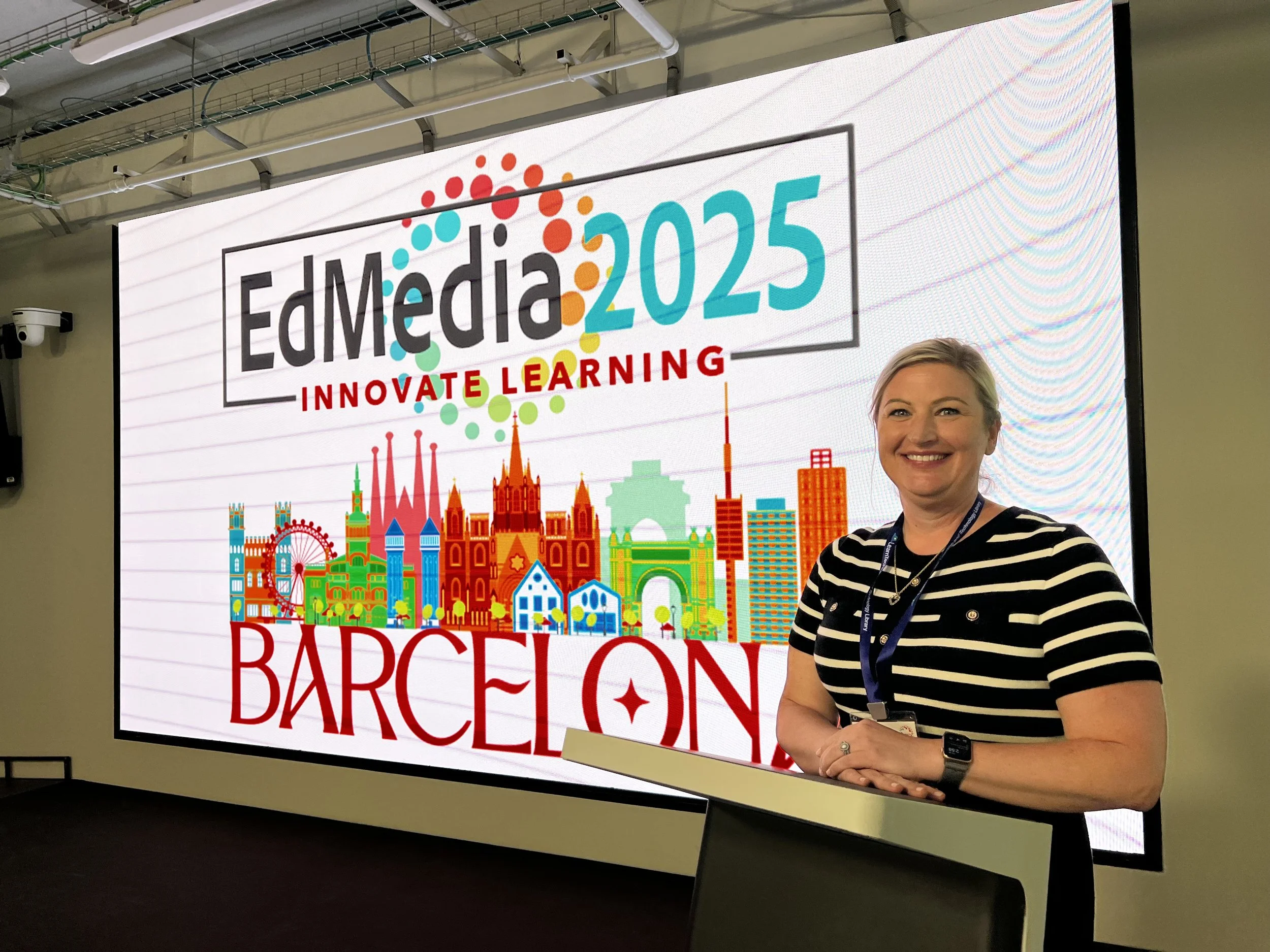
EdMedia 2025 - Symposium: Gamification and Persistence in Complex STEM Learning
I participated in a poster session alongside nine other Learning Technologies (LTEC) graduate students as part of a symposium examining the role of digital technologies in creating more equitable and engaging learning experiences. The session brought together studies spanning K–12, higher education, and informal learning contexts, offering a broad view of how emerging and established technologies are being used to support learners.
Across the posters, the symposium highlighted work involving artificial intelligence, gamification, intelligent personal assistants, pedagogical agents, and ambient video environments, with a shared focus on supporting learners’ cognitive, emotional, and motivational needs. The session emphasized key themes such as digital inclusion, learner engagement, personalization, and the broader systems that influence effective technology integration. Collectively, the posters fostered discussion around evidence-based practices, ongoing challenges such as access and equity, and future directions for innovation in learning technologies.